|
. |
|||
|
AMERICAN CINEMA PAPERS
2013
|
VENICE 2010 STORMY WEATHER by Harlan Kennedy
It’s the getaway tale
that got away. So easy to love. Yet so hard to ‘do’ definitively. Even to do
deftly and imaginatively enough to bring justice to its mixed and many
elements. THE TEMPEST, a play set
on a magical island, is the closest Shakespeare ever came to a vacation
brochure on stage. “Come to Prospero Island.” Inhale its balmy breezes!
Wonder at its scenic beauty! Meet its resident sprite Ariel! Marvel at its
monster Caliban, part man, part fish! In the
evening have dinner (prices included) with ruler Prospero and his lovely
daughter Miranda. Prospero might perform some magic tricks for you. He can do
quite a lot with that staff, and with his books, never mind with his lightfooted assistant Ariel. The only catch for
vacationers? You must be shipwrecked first. The mother of tempests will be
thrown in at the start of your visit. It will spew you forth on a rocky
atoll, inspired for Shakespeare, goes the history, by a true tale of wreck
and disaster in the 16th century mid-Atlantic. The “vexed Bermoothes”, so named then, are a long way from the Venice
lagoon. But our festival island, the Lido, has some little kinship with
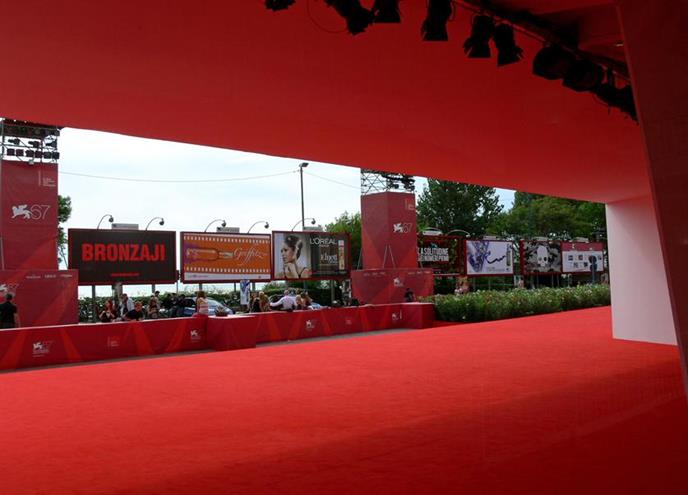
Shakespeare’s. We come; we see (movies); we are conquered by enchantment. So
Julie Taymor’s screen version of THE TEMPEST seemed
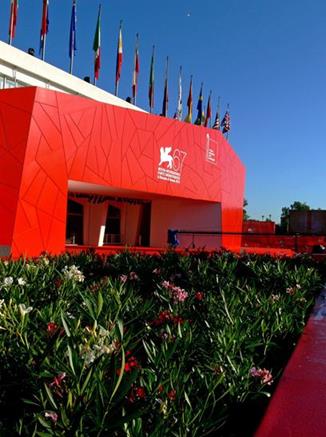
apt for a closing flick at the 67th Venice Film Festival. It’s the
latest addition to a long line of pictures inspired by the play. From
FORBIDDEN PLANET (Robbie the Robot as Caliban) to
Peter Greenaway’s PROSPERO’S BOOKS, from the western YELLOW SKY (Greg Peck
and Dick Widmark moving in on Walter Huston’s
desert Prospero) to Derek Jarman’s THE TEMPEST. And we mustn’t forget
remoter relatives – stories of challenge, awakening and catharsis on a
distant shore – like Nicolas Roeg’s CASTAWAY or
Michael Powell’s AGE OF CONSENT. The latter starred Helen
Mirren opposite a Prospero-ish James Mason in a
sea-lapped Antipodean paradise. Now Miss Mirren –
excuse me, ‘Dame Helen’ – plays the protagonist herself,
sea-changed/sex-changed into Prospera, ruler of a
chunk of rock in the middle of an ocean. Its lava floors, crisp grey sands
and variegated flora were shot in Hawaii. For another production novelty, the
controversial contempo British comic Russell Brand
plays the main clown, Trinculo. For another still,
Ariel and Caliban are played respectively by the
white Ben Whishaw and the black Djimon
Hounsou. An African, cast as the man-monster?
Protest alert!! That’ll get the political correctness crowd raging or
foaming. Shakespeare, you are
putting up with many liberties. Yet oddly, Taymor’s
TEMPEST sometimes feels well-behaved, even a bit tame, as if the liberties
are in the details while the larger vision remains passive, respectful, traditional. The verse is finely
spoken, especially by Dame H, who looks terrific in her primitive glad-rags
and spiky bleach-blonde hair. (Either the crudest elements or the finest
coiffeurs are responsible for that). Mirren explains by her acting why THE
TEMPEST is important. It’s about a human playing God in a godless
world-away-from-the-world. This dispensing of justice and sovereignty is a
tricky, volatile, anguished business – yet it is better (Shakespeare implies)
that a man or woman does it than some confabulated Being in the skies. Malice and mirth (the
conspiring aristos and drunken clown-proles), a
monster (Caliban) and a spritely muse (Ariel), move
around the island. They seem to describe concentric circles as they converge,
fast or slow (depending on the production), on Prospero, their target or
magnet. And there is the
ambiguity. Is Prospero the story’s endangered quarry or its luring
mastermind? A production should resolve this and I am not sure Taymor’s does. Mirren’s gender novelty, surprisingly,
makes no difference. Surely the transexualising of
Prospero should have radiated out – or Taymor
should have ensured that it did – to affect or re-shape other parts of the
drama? No, the ambivalence
remains. So does the sense that this film is a mosaic, a broken pattern of
beautiful parts, as disconnected as the disparate Hawaiian locales. Here a rocky beach, there a mangrove swamp, here a volcanic
crag, there a tall forest. Only in Ariel’s manifestations and metamorphosings do the molten possibilities of cinema –
the whirring and stirring of make-believe into something motile yet moulded –
create a world where differences come together and sense is made of visual
diversity. If the film’s unevenness
is bad news for Taymor fans, it’s good news for
TEMPEST fans. Ooh goody, we say, the play is still unconquered! There will be
more versions. It really is as rich
and complex as we thought. Taymor joins a long line
of stage and screen directors who haven’t got it quite right. Greenaway’s
PROSPERO’S BOOKS, the best attempt so far, was a little too bookish. Jarman’s THE TEMPEST was too campy, though who could not
love blues singer Elizabeth Welch closing the movie with “Stormy Weather.” On
stage Peter Hall and Peter Brook (“ye elves of halls, brooks….”) had a few
goes each and didn’t make it. Like the weather itself THE TEMPEST rolls on, ever changing,
ever defying human coercion or control, ever moody and magnificent. The play
really does answer to the old Hollywood catchline:
“All human life is here.” Only not just human. It’s about gods and monsters,
angels and devils, men and magicians. Only the brave attempt to catch its multitudinousness on screen, let alone on stage. Bring on
the next challenger. COURTESY T.P. MOVIE NEWS. WITH THANKS TO THE AMERICAN FILM INSTITUTE FOR THEIR
CONTINUING INTEREST IN WORLD CINEMA. ©HARLAN KENNEDY. All
rights reserved |
|
|
|
|
|
||